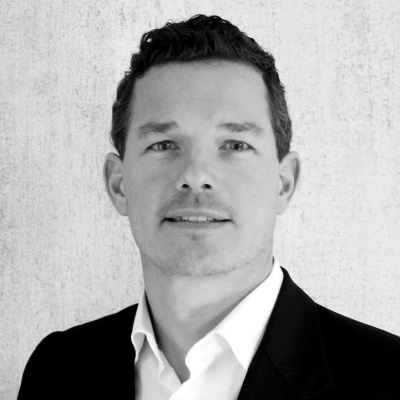
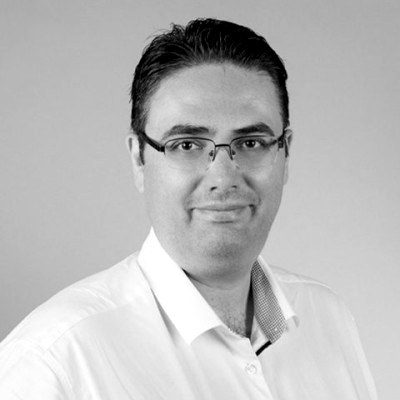
Alexander HirschGroup Chief Marketing Officer, WISeKey


Deep Tech Panel, From Root of Trust to Quantum‑Secure Space
As WISeSat.Space enters its next phase following its Nasdaq listing, this panel will explore the technology behind QSOC and a hybrid public-private sovereign constellation. It will examine how security can extend from the semiconductor inside a device to the satellite link, ground infrastructure, and applications that depend on it.
The themes below guide the conversation. They indicate the kinds of questions that may come up, not a fixed list, and not every theme will be covered.
Explore how satellite payloads, onboard processing, ground stations, and connected devices can form an integrated security architecture.
Where should security functions run: in the device, satellite, or ground infrastructure? How do power, bandwidth, latency, and radiation constraints shape the design? Which capabilities are ready for deployment, and which require orbital demonstrations?
PQC uses algorithms designed to resist attacks by both classical and quantum computers and can operate over conventional satellite communications. The discussion will cover key establishment, digital signatures, and migration from existing cryptography.
How can PQC protect satellite links against ‘harvest now, decrypt later’ threats? What are the costs in processing, memory, and message size? How can long-lived satellites update cryptographic algorithms securely?
Secure chips can anchor device identity, protect cryptographic keys, verify firmware, and support secure boot and remote attestation.
How can operators verify that a satellite or ground terminal is running authorized software? How are keys provisioned, rotated, and revoked? How should the architecture respond to compromised hardware or disrupted connectivity?
Explore identities for satellites, sensors, ground stations, operators, and applications, supported by certificates and controlled authorization.
How can millions of connected devices authenticate across a constellation? Who controls the certificate authorities and trust policies? How can sovereign users retain control of their identities while interoperating with commercial infrastructure?
Examine hardware-backed wallets for signing transactions and supporting potential machine-to-machine services, including payments for connectivity or data.
Where should wallet keys reside? How can transaction authorization remain secure during intermittent connectivity? How can wallet signatures migrate to PQC, and what changes are also required in the underlying blockchain?
Satellite QKD uses quantum signals to establish shared keys and reveal potential interception under the protocol’s security assumptions. It requires specialized optical hardware and authenticated classical communications.
What limits deployment: pointing accuracy, atmospheric conditions, photon loss, or ground-station availability? Where do trusted nodes remain necessary? How can QKD complement PQC, and how should both feed into encryption and key-management systems?
Connect these technologies into an operational model for a hybrid public-private constellation, including sovereign control over keys, identities, access policies, and dedicated capacity.
Select a profile link to learn more about each speaker.
Bringing Sovereign, Quantum‑Secure Infrastructure to Space
Speakers and discussion themesThe full programme, from team arrival at 8:00 a.m. to the event close at 3:00 p.m.
See the full agendaFor press accreditation, interviews or questions about our events, contact our team.
 View profile